
10 Web Design Trends Dubai Businesses Should Follow in 2026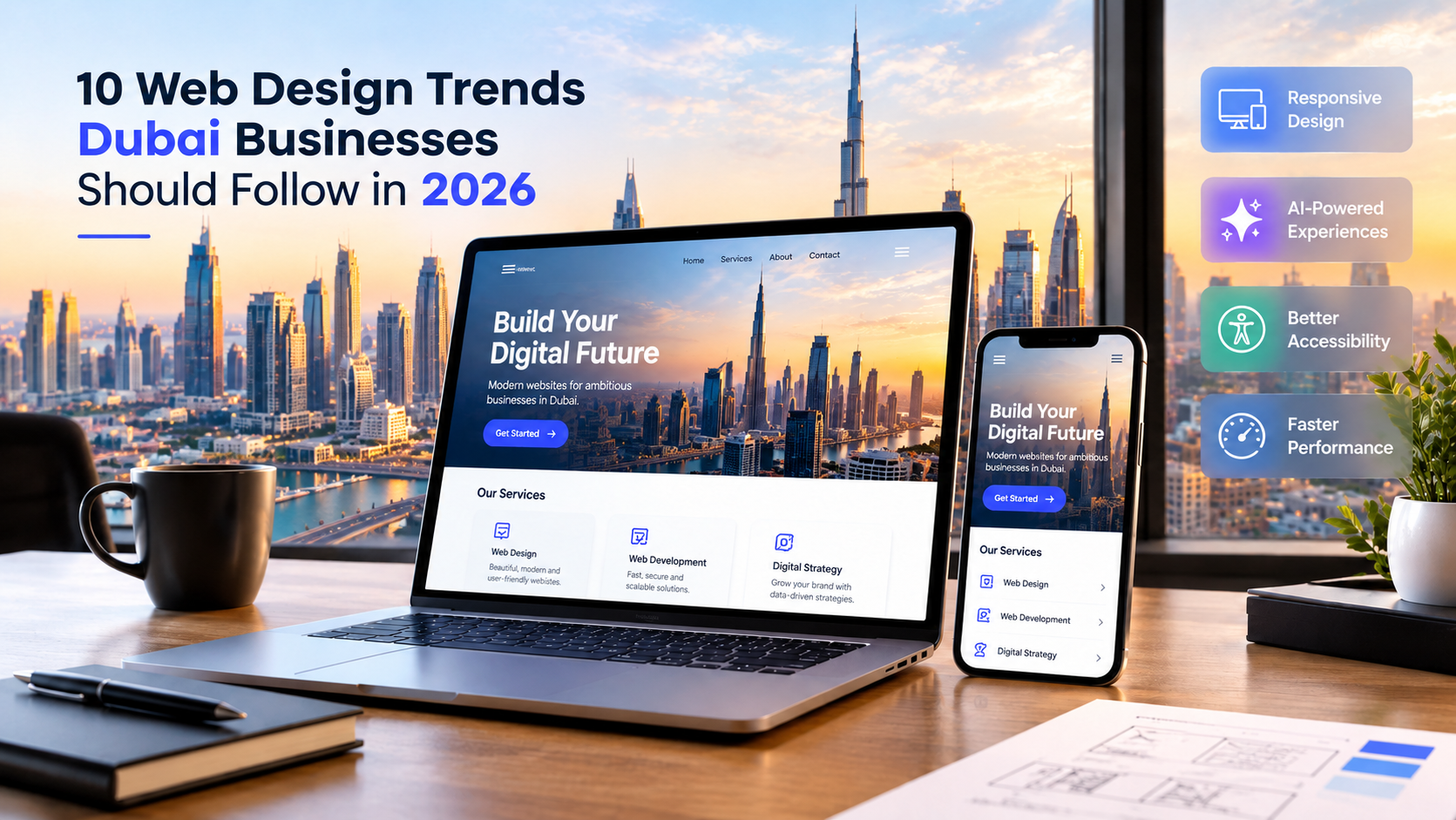
Dubai is one of the world's most competitive business markets, and a company's website often becomes the first serious interaction a potential customer has with its brand. A Website Designer in Dubai can create a professional online presence that communicates value quickly and makes the next step obvious. Whether the business serves local residents, international visitors, corporate clients, or online shoppers, a Freelance Web Developer Dubai can help build a fast, user-friendly website that supports business goals.
In 2026, effective web design is moving beyond visual polish. Dubai businesses increasingly need websites that are fast, mobile-friendly, accessible, easy to navigate, locally relevant, and built around real customer journeys. The following ten trends are especially useful for businesses reviewing or planning a website this year.
1. Mobile-First Design
Dubai customers frequently research businesses from smartphones while commuting, shopping, dining, travelling, or comparing services. A desktop-first layout that merely shrinks onto a phone can create unnecessary friction.
A mobile-first website should prioritize:
Readable typography without zooming
Thumb-friendly buttons and navigation
Short, focused forms
Fast-loading images
Clear service information
Simple paths to call, message, book, or purchase
The important distinction is that mobile-first design is not simply responsive design. It means deciding what mobile visitors need most and making those actions effortless.
2. Faster Websites and Performance-Led Design
A visually impressive website can still lose customers if pages take too long to load or interactions feel sluggish. Performance should therefore be considered during design rather than treated as a technical task at the end.
Dubai businesses should pay particular attention to image compression, font loading, unnecessary scripts, video backgrounds, animation and third-party widgets.
A practical performance review should ask:
Are the most important pages fast on mobile networks?
Are images appropriately sized and compressed?
Does content remain stable while the page loads?
Can users interact quickly with menus, forms and buttons?
Good performance does not require a plain website. It requires intentional design decisions that deliver visual quality without unnecessary technical weight.
3. Premium Minimalism With Strong Brand Identity
Dubai is associated with premium hospitality, real estate, finance, retail, technology and luxury services. Many brands therefore want a polished visual identity. The challenge is avoiding a generic 'luxury' template.
Premium design works best when whitespace, typography, photography, layout and brand details have a clear purpose. A strong website can feel sophisticated without filling every section with gradients, animations or oversized visual effects.
The goal is recognizable brand character rather than decoration for its own sake.
4. AI-Assisted Personalization and Customer Journeys
AI can help websites respond more intelligently to what visitors are trying to accomplish. Depending on the business, this might include smarter search, product recommendations, conversational assistance, personalized content or guided service selection.
For example, a property website could help a visitor narrow options by location and requirements, while a service company could guide visitors toward the right package.
The best use of AI is not to impress visitors with technology. It is to reduce friction and help them reach a useful answer faster.
5. Multilingual and International-Friendly Experiences
Dubai serves a highly international audience. Depending on the business, visitors may expect information in more than one language or may be comparing a company from outside the UAE.
A multilingual experience should be planned carefully rather than adding automatic translation as an afterthought. Navigation, page structure, text length, forms and calls to action all need to remain usable across languages.
Businesses should also consider whether international visitors need clear information about service areas, delivery, booking, contact methods, currencies or operating locations.
6. Conversion-Focused Homepage Design
A homepage should answer three questions quickly: What does the business offer? Why should the visitor trust it? What should the visitor do next?
Strong conversion-focused homepages typically combine:
A clear value proposition
A relevant primary CTA
Proof such as portfolio work, reviews or certifications where genuine
Focused service or product sections
Simple contact or booking paths
The CTA should match the business. A consultant may want a consultation request, a restaurant may need reservations, and an e-commerce business may want shoppers to browse products.
7. Accessibility as a Core Design Requirement
Accessibility helps make websites easier to use for people with different abilities and browsing needs. It should be considered from the beginning of a website project.
Readable contrast
Logical headings
Keyboard-friendly navigation
Descriptive links
Accessible forms
Useful image alt text
Visible focus states
Captions or transcripts when appropriate
Accessibility is not merely a compliance checklist. Clear structure and usable interfaces generally improve the experience for everyone.
8. Purposeful Motion and Micro-Interactions
Animation can make a website feel responsive and modern, but more animation does not automatically mean better design.
Useful micro-interactions can include button feedback, navigation transitions, progress indicators, subtle scroll effects and interactive product demonstrations.
For Dubai businesses, the priority should be maintaining a premium experience without sacrificing speed, accessibility or clarity. Motion should guide attention rather than compete with the content.
9. Local SEO and Location-Aware Website Design
A Dubai business website should make it easy for potential customers to understand where the company operates and what areas it serves.
Clear business location and contact information
Relevant service-area pages where genuinely useful
Consistent business details
Location-specific service information
Maps or directions where helpful
Real local examples and photography when available
Local relevance should never mean repeating 'Dubai' in every heading. The better approach is to provide information that genuinely helps someone deciding whether the business can serve them.
10. Websites Built for Search, AI Discovery and Humans
Search is evolving, but strong website fundamentals remain important. Pages should have clear headings, useful answers, descriptive titles, logical internal links and accessible visible content.
Businesses interested in AI search should resist the temptation to write artificial-sounding copy simply to target an AI system. Clear answers, original information, useful examples and strong topical organization are more durable.
The objective is simple: make the website easy for a human visitor to understand and easy for search systems to interpret.
How to Decide Which Trends Your Business Actually Needs
Not every Dubai business needs a complete redesign. Start by identifying the biggest user or business problem.
If mobile users struggle, prioritize mobile UX.
If pages are slow, prioritize performance.
If visitors do not understand the offer, improve messaging and hierarchy.
If leads are weak, improve conversion paths and CTAs.
If international users struggle, consider multilingual and international UX.
If the website feels generic, strengthen brand identity rather than adding more effects.
This approach prevents businesses from redesigning for trends alone. The best changes are the ones that solve a real customer problem.
Choosing the Right Web Designer
The right designer should understand more than visual aesthetics. A business website has to balance usability, performance, accessibility, search visibility, brand positioning and conversions.
Businesses considering a redesign can review the work and services of a Saad Web Designer to assess whether the approach fits their goals.
Companies specifically looking for a professional web designer in Dubai should also evaluate portfolio quality, communication, responsive design capability and whether the designer understands business objectives rather than focusing only on appearance.
Frequently Asked Questions
What is the most important web design trend for Dubai businesses in 2026?
There is no single trend for every business. Mobile usability, performance, accessibility, clear messaging and conversion-focused design are strong foundations.
Should every Dubai business redesign its website in 2026?
No. Businesses should first identify problems with mobile usability, speed, messaging, accessibility or conversions. A targeted improvement may be more useful than a full redesign.
Does web design affect SEO?
Website structure, usability, performance, crawlability and page experience can influence how effectively visitors and search engines interact with a site. Design and SEO should therefore be planned together.
Is AI necessary for a modern website?
No. AI is useful when it solves a genuine customer problem, such as improving search, recommendations or guided service selection. It should not be added simply because it is fashionable.
How can a Dubai website stand out from competitors?
Focus on a clear value proposition, distinctive branding, strong proof, fast performance, excellent mobile UX and a simple conversion journey. Differentiation should come from the business and customer experience, not visual effects alone.
Final Thoughts
The strongest Dubai websites in 2026 will not necessarily be the ones with the most animations or the most fashionable visual effects. They will be the ones that understand their audience and remove friction from the customer journey.
For many businesses, that means starting with mobile usability, speed, clear messaging and conversion paths, then adding personalization, accessibility, multilingual support and brand-led visual design where they create genuine value.
Good web design is ultimately about making the right information easy to find, the brand easy to trust and the next action easy to take.
SaadAsharf
Author Bio
Saad Ashraf Web Developer
Saad Ashraf is a senior Web Developer and Web Designer based in Dubai, UAE, with over 18 years of experience in web development, SEO, digital marketing, and e-commerce.
Through SaadAshraf.net, he shares practical insights to help businesses build professional websites and strengthen their online presence.